|
One cannot talk about the history of veterinary medicine without paying homage to Dr. Frederick Douglass Patterson, without a doubt one of the most influential veterinarians the world has ever seen.
Born in 1901 in Washington, D.C., Dr. Patterson excelled in school, studying Agriculture at Prairie View Institute (now Prairie View A & M). While there, he was mentored by Dr. Edward Evans, the first Black graduate of Iowa State College (now University) veterinary school, and the first Black veterinarian to be licensed in Texas. Dr. Evans encouraged his protégé to follow in his footsteps, and Dr. Patterson proceeded to get his Doctorate of Veterinary Medicine and his Masters in Science at Iowa State—the only Black student in the program at that time. He achieved this while holding two jobs to pay for his education. While he described it in his autobiography as a “fine experience,” where, “I did not feel odd being a part of the group of students working in the veterinary clinic although I was the only black person there,” he also wrote, "I learned a lesson with regard to race that I never forgot: how people feel about you reflects the way you permit yourself to be treated. If you permit yourself to be treated differently, you are condemned to an unequal relationship."
Following graduation from Iowa State, Dr. Patterson attended Cornell University, where he obtained his doctorate in Philosophy in Veterinary Pathology. He took his next job teaching veterinary medicine at Virginia State College, and while there was chosen to serve as the Director of the U.S. Department of Agriculture.
In 1935, Dr. Patterson became the third president of the Tuskegee institute, a position he would hold for nearly 20 years. It was here that he cemented his legacy as one of the most important educators and veterinarians in history. Under his leadership, Tuskegee developed into a world-renowned university, with standard-setting programs in aviation, engineering, and commercial dietetics. In 1944, he founded the Tuskegee University School of Veterinary Medicine, a program so advanced that segregated Alabama took the unprecedented step of paying to send white students to this Black university. The Tuskegee veterinary school has graduated approximately 75% of Black veterinarians who have practiced in the U.S.
Also in 1944, Dr. Patterson founded the United Negro College Fund (UNCF), which administers 10,000 scholarships per year and has raised over $3.4 billion since its inception. His work caught the attention of President Truman, who appointed him to his Commission on Higher Education from 1946-1947. His work on that commission was instrumental in the eventual development of the community college network.
Following his tenure at Tuskegee, Dr. Patterson became the director of the Phelps-Stokes Fund, working to assist in the education of young people from disadvantaged backgrounds. While serving there, he was tapped by the World Bank to serve as the Advisor on Education and Social Services for a general survey mission to Nigeria. This was the first mission of the World Bank to an African country, with the goal of enhancing Nigerian economic development. Dr. Patterson was one of the first, if not the first, African American to serve on a mission for the World Bank.
Dr. Patterson’s achievements were widely recognized both during and after his lifetime. In 1986, he received a Candace Award from the National Coalition of 100 Black Women. The following year, Ronald Reagan awarded him with the Presidential Medal of Freedom. In 1996, the UNCF started the Frederick D. Patterson Research Institute, dedicated to studying the educational status of African Americans. Iowa State University College of Veterinary Medicine had developed two scholarship funds in his honor, celebrating diversity and inclusion.
Sadly, despite the work of Dr. Patterson and numerous others, the truth remains that the Black community is woefully underrepresented within veterinary medicine. African Americans make up only 1.3% of veterinarians, 5.7% of veterinary technicians, and 3.7% of veterinary assistants, despite composing over 12% of the U.S. population.** We as a profession need to do better in welcoming and supporting veterinarians of color. To help forward that goal, Pawsome Vet Care has donated to UNCF
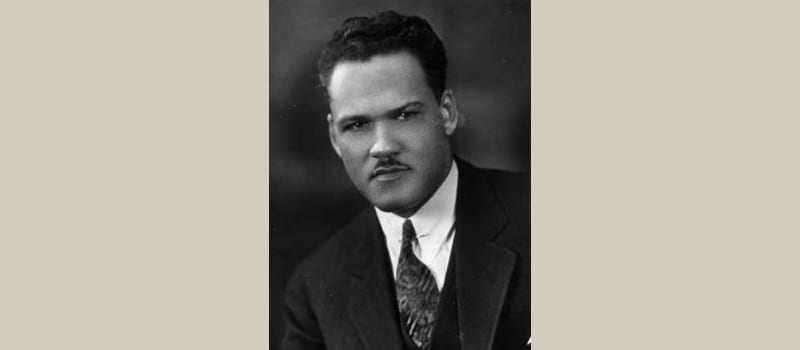
(Photo courtesy of the UNCF)
**Statistics as of 2023 via AAHA
Written by Alexis Soutter, DVM
Edited by The Pawsome Vet Care Team
|


 860-746-0244
  860-746-0022




 Processing ....


 Rx Refill
 Pet Portal